Showing posts with label Innovation. Show all posts

South Korea’s new robotic prison guards


With incarceration rates on the rise, South Korea's latest robotic endeavor seeks to alleviate stress on overworked prison guards.
A prison in Pohang, South Korea has begun its first field trial of the world’s first robotic prison guards – roving, autonomous patrols that vaguely resemble a cross between Johnny 5 and a Zamboni. Equipped with 3D depth cameras, a two-way wireless communication system, and software capable of recognizing certain human behavior patterns, the 5-foot-tall bots keep a cycloptic eye out for trouble while patrolling the corridors of the prison block. The “guard” is designed to conduct self-directed patrols, guided by navigation tags located along corridor ceilings, but is supervised by a human guard and may be controlled via iPad.  The pattern recognition algorithms focus on behavior that signals trouble and can alert controllers. In emergency scenarios, such as an impending suicide attempt, assault, or arson, correctional officers may respond. If the situation is less dire, two-way cameras and microphones can allow control center guards to communicate directly with restive prisoners, heading off an escalation in hijinks. At the moment, the design of the robot itself does not incorporate any features that would involve physical interaction with prisoners, alleviating previous reservations of inmates, who seemed concerned with the possibility of being roughly handled by the machines.
The robot was developed by the Asian Forum for Corrections in concert with the Electronics and Telecommunications Research Institute and manufacturer SMEC and costs 1 billion Korean won, or about $879,000 per unit. Steep price tag notwithstanding, prison authorities are optimistic that, if effective, the robots will eventually result in a cutting of labor costs. With over 10.1 million people incarcerated worldwide, they see the implementation of robotic guards as the future of penal institution security. “The purpose of developing this kind of robot is to secure prisoners’ life and safety and decrease the workload of correctional officers in a poor working environment,” said AFC Chairman Lee Baik Chul in an interview with Reuters. For their part, the designers say that the next step would be to incorporate functionality capable of conducting body searches, though they admit that this is still a ways off  presumably to sighs of relief from prisoners.

Google :Sci-Fi Glasses


Google's new project ,we can say a remarkable improvement in Science and technology achievement.We’re more than a quarter of the way through 2012, and as you may have noticed, we have failed to acquire silver jumpsuits or jetpacks.

Free Visit Museums Around the world

Acropolis Museum Collection
Now you can see world's famous  Museums without travelling thousands of kilometres and spending thousands of dollars,'Google art Project' providing reality environment to the viewers to visit famous museums of countries including Brazil, Mexico and Argentina.
By following Google street view technology, Google offers its user to view museum in 360 degree and the exited things is they can be viewed at gigapixel zoom. The project has been launched in Pinacoteca museum in Brazil.
The project started with 17 galleries in Feb 2011 and now features 151 museums around the globe
Visit http://www.googleartproject.com to enjoy viewing rare things around the world.

Impossible Software Do Impossible Things With Your Video


Impossible Software has been building its product for a little while now. Founded 2008, its concentrated on real-time video, especially placing images and video into other videos. What do I mean here? I mean putting products into video that were never there in the first place: product placement. Yes, this has been done before, but I’m going to lay a bet you’ve not seen stuff like this.
The simplest way of explaining what they do is for you to try out the demos here

Self Guided Bullet


U.S.-military-developed-self-guided-bullet-can-travel-over-a-mile-and-change-direction-before-it-snags-its-target


Adding another impressive technological accomplishment to its arsenal, the United States military has recently developed and created a self-guided bullet, able to twist, turn, and travel over a mile before it hits its target.With the ongoing advancements in modern technology it should come as no surprise that military agencies, in this case the United States military, are seeking to apply new technologies to the battlefield.

Amazing Solar Technology Innovations


 It’s true amazing solar tech innovations just keep coming. Some advances come in the form of new handheld devices and applications. Others promise to elevate solar into a mainstream energy source that may one day replace greenhouse-gas-emitting fossil fuels. Here are five recent innovations that have left both solar experts and newbies in a daze.


Windows 8 stable on ARM

Windows 8 running on a Texas Instruments OMAP 4470 processor at CES.Windows 8 is stable on the ARM chip platform and will be seeded to developers soon, sources told CNET. Devices may be priced significantly less than their Intel counterparts, too.Windows 8 on ARM should go to developers in February, said one source, who had some hands-on time with a high-profile device from a major PC maker, adding that Windows 8 was impressive and stable.
"In October of last year. [Windows 8 on ARM] scared the industry because it was unstable. But what we are seeing now is quite stable," said another source, who also confirmed an expected February developer time frame.

MIT’s Revolutionize Car

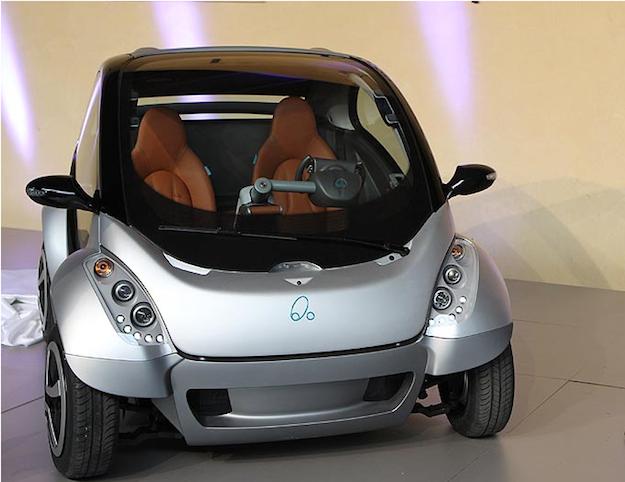
MIT Folding City Car Hiriko
A concept car from MIT Media Labs has become a reality. The electric Hiriko city car folds down into tight parking places and is very maneuverable, but will need some practice on the driver's part in order to make the most of its abilities.

iPad-3 Retina Display

As the rumored release date for Apple's next-generationiPad nears, clues as to what the iPad 3 will look like keep flowing from a variety of sources. A new rumor involves images found in iBooks 2, Apple's latest iOS app, which hint at a 2X display, giving more weight to the rumors that a Retina Display will be included on the iPad this spring.
9to5Mac has uncovered some of the images lurking in the code of Apple's latest software updates. The first screen capture shows the files in the file structure. As you can see, the files have "2x.png" in the name, which many believe signals that a display with double the resolution is coming out soon.
(Credit: 9to5Mac)

Watch 3D Video Without Glasses


PHILADELPHIA, Stream TV Networks, Inc. announced today that it will unveil its new Ultra-D technology at CES 2012.  Ultra-D is a next generation 3D without glasses display technology that surpasses all 3D viewing experiences offered to date.
Developed by Stream TV Networks, Inc., the producer of the eLocity brand of mobile tablets launched first in 2010, the Ultra-D technology is strictly proprietary and leverages custom hardware, middleware techniques and software algorithms to create unprecedented auto stereoscopic 3D imagery. This technology will provide consumers with access to unlimited 3D content by enabling real-time conversion of:
  • 2D content into 3D autostereoscopic (without glasses)
  • 3D stereoscopic content (with glasses) to 3D autostereoscopic (without glasses)
The Ultra-D technology thus supports the immediate adoption of 3D consumer hardware despite limited availability of 3D content. Real-time conversion of 2D to 3D and 3D with glasses to 3D without glasses works seamlessly with various content formats including Blu-ray, DVD, PC gaming, Internet, cable and satellite content.

Camera captures one trillion frames per second

MIT researchers have created a new imaging system that can acquire visual data at a rate of one trillion exposures per second. That’s fast enough to produce a slow-motion video of a burst of light traveling the length of a one-liter bottle, bouncing off the cap and reflecting back to the bottle’s bottom. 

Media Lab postdoc Andreas Velten, one of the system’s developers, calls it the “ultimate” in slow motion: “There’s nothing in the universe that looks fast to this camera,” he says.


Video: Melanie Gonick

The system relies on a recent technology called a streak camera, deployed in a totally unexpected way. The aperture of the streak camera is a narrow slit. Particles of light — photons — enter the camera through the slit and pass through an electric field that deflects them in a direction perpendicular to the slit. Because the electric field is changing very rapidly, it deflects late-arriving photons more than it does early-arriving ones. 

World's first 128Gb 20nm NAND flash could pack 2TB into a 2.5" SSD


World's first 128Gb 20nm NAND flash could pack 2TB into a 2.5" SSD

Intel and Micron's joint venture IMFT has announced that it has produced a 128Gb die. A package combining eight such dies together would be small enough to fit on a fingertip and boast an unprecedented 128GB capacity. Mass production will start in the first half of next year, and devices using the new dies are likely to start shipping in 2013.IMFT also announced that it had started mass production of a 64Gb 20nm die. This part was first announced in April of this year. Consumer delivery should start in the middle of next year.
The 128Gb parts will take longer to reach consumers because in addition to having a larger capacity, they also include a new interface and page size. NAND flash dies are organized internally into pages, and pages are organized into blocks. Read and write operations occur a page at a time; erase operations have to be performed a block at a time.
Current flash chips, including the 64Gb parts that IMFT has started mass producing, use a page size of 8,192 bytes. The 128Gb dies increase this to 16,384 bytes. As a result, controllers and drive firmware will have to be modified to accommodate the new page size.

Genes Controlled By Computer


Yeast
In a joint effort, researchers at U.C. San Francisco and ETH Zurich have developed a method that enables them to precisely control gene expression in individual cells of yeast. Their research,published in Nature Biotechnology, represents an interesting step forward in genetic engineering.
Here’s the basics of how it works: the researchers expose the yeast to a red light. This changes the shape of a protein called phytochrome, a common regulator that’s found in quite a few species. Exposure to light changes the shape of the phytochrome, which allows it to turn a gene on, so the gene will produce its particular protein. The phytochrome can then be exposed to a different shade of red light to turn the gene off.

Scientists invent lightest material on Earth. What now?


Scientists have invented a new material that is so lightweight it can sit atop a fluffy dandelion without crushing the little fuzzy seeds.
It's so lightweight, Styrofoam is 100 times heavier.
It is so lightweight, in fact, that the research team consisting of scientists at UC Irvine, HRL Laboratories and Caltech say in the peer-reviewed Nov. 18 issue of Science that it is the lightest material on Earth, and no one has asked them to run a correction yet.
That's light!
The material has been dubbed "ultralight metallic microlattice," and according to a news release sent out by UCI, it consists of 99.99% air thanks to its "microlattice" cellular architecture.
"The trick is to fabricate a lattice of interconnected hollow tubes with a wall thickness 1,000 times thinner than a human hair," lead author Tobias Shandler of HRL said in the release.
To understand the structure of the material, think of the Eiffel Tower or the Golden Gate Bridge — which are both light and weight efficient — but on a nano-scale.
The material in a picture sent out with the release is made out of 90% nickel, but Bill Carter, manager of the architected materials group at HRL, said it can be made out of other materials as well — the nickel version was just the easiest to make.
As for the uses of such a material? That's still to be determined. Lorenzo Valdevit, UCI's principal investigator on the project, brought up impact protection, uses in the aerospace industry, acoustic dampening and maybe some battery applications.In the meantime, we asked Carter what would happen if we threw this material in the air and waited for it to fall to the ground.
"It's sort of like a feather — it floats down, and its terminal velocity depends on the density," he said. "It takes more than 10 seconds, for instance, for the lightest material we've made to fall if you drop it from shoulder height."

3D Printers

Objet’s family of 3-Dimensional Printing Systems brings high-resolution, fine-detailed models into the hands of designers or engineers and fits in any office environment. Objet’s patented PolyJetTM and PolyJet matrix technology provides a complete 3D printing solution for virtually any rapid prototyping application. Objet Studio Software guarantees that your models are printed smoothly and accurately.

Connex 3D Printers for Multi-Material Parts

Objet’s Connex family of multi-material 3D printing systems is based on Objet’s unique PolyJet Matrix™ Technology. The Connex family offers the completely unique ability to print parts and assemblies made of multiple model materials, with different mechanical or physical properties, all in a single build. Going even further, the Connex family of multi-material 3D printers can also fabricate Digital Materials™ on the fly, enabling users to create composite materials that have preset combinations of mechanical properties.
The Connex family of 3D Printing Systems works with FullCure model and support materials and Objet Studio for Connex™ software.

Eden 3D Printing Systems

Eden 3-Dimensional Printing Systems offer unprecedented return on investment (ROI) for professional rapid prototyping applications. Printing with the high accuracy of ultrathin 16µ layers, all Eden systems produce models with exceptionally fine details and smooth surfaces.
With the Eden 3-Dimensional Printing Systems family, you can select the system that best fits your needs, whether in build size, productivity or budget requirements. The compact design and the clean process of all Eden systems makes them ideal for any office environment.
The Eden family includes:
Objet Desktop PrintersEden 350 & Eden 350V - 3D printers by Objet
High resolution 3D printing with 28 micron layer thickness isn’t just for big-budget enterprises. With Objet’s family of low-cost desktop 3D printers, designers and engineers can build true-to-life models and prototypes featuring ultra-precision details straight from the office desk.Eden 260V - 3D printers by Objet


FullCure® Materials

Objet FullCure photopolymer materials offer a varied choice of color, mechanical properties and include support material for complex geometries. This gives you maximum flexibility in creating high-resolution models that meet a wide range of fit, form, function and “feel” requirements.
The Eden family includes:
Objet Desktop Printers
High resolution 3D printing with 28 micron layer thickness isn’t just for big-budget enterprises. With Objet’s family of low-cost desktop 3D printers, designers and engineers can build true-to-life models and prototypes featuring ultra-precision details straight from the office desk.Eden 250 - 3D printing systems by Objet

Objet Studio™ Software

Objet Studio support STL and SLC files exported from 3D CAD software packages. Using the intuitive interface, you can easily organize, check and build models by dragging and dropping the STL file onto the Objet Studio build tray.

Evolution of the 3D Experience


Enter a new dimension in TV and Home Entertainment with Samsung 3D TV. Experience cinematic-quality 3D entertainment in the comfort of your living room. Samsung 3D* is a truly immersive viewing experience, with the power to fill your room with images you can almost touch.

Evolution of the 3D Experience.


Over the years, 3D has evolved to now give you a great experience. Samsung brings the wonder of 3D home with full color and high resolution. Imagine breathtaking images with immersive depth and dimension that you can watch from your sofa.

The 3D Revolution.


Hollywood has embraced 3D with a growing number of new 3D films. Ever the innovator, Samsung has partnered withDreamWorks Animation and Technicolor for content you can get right now. And it's not just Hollywood. A 3D TV and sports broadcast revolution is underway, and Samsung 3D TV is ready to deliver. Samsung is the world's first 3D LED TV and is compatible with broadcast and Blu-ray 3D standards.

WHAT YOU NEED FOR 3D

3D TV | 3D Content (Blu-ray 3D movie) | 3D Active Glasses | Blu-ray 3D player

How 3D Works.


Our eyes are spaced apart from each other, which means our left and right retinas see objects at slightly different angles. In real life, the brain merges these two images into a single three-dimensional image. To recreate this experience of depth on television, a 3D TV will display two separate but overlapping images of the same scene simultaneously, and at slightly different angles as well. One image is intended for the left eye, the other for the right. A pair of Active Glasses helps viewers perceive the two 2D images as one 3D image.

Watch 3D. Look Stylish.


See all the jaw-dropping 3D action through Samsung's sleek Active Glasses (sold separately). These glasses use a shutter technique to quickly block the left eye, and then the right, in sync with the TV which itself is alternating left and right images rapidly. This is fast enough that the brain perceives no gaps. The glasses help the mind merge the two images into one, creating a 3D effect and offering a deep, immersive experience. Samsung offers two forms of 3D glasses - battery-operated and rechargeable - that will fit comfortably over prescription glasses.

Presenting our
3D Lineup.


Samsung's eye-popping 3D capabilities can be found in our new lineup of LED, LCD and Plasma TVs, and Blu-ray Players, including the LED 7000, LCD 750, PDP 7000 andBlu-ray 6900.